Face Swap Live is a mobile app created by Laan Labs that enables users to swap faces with another person in real-time using the device's camera. It was released on December 14, 2015. In addition to swapping faces with another person, the app enables users to create videos using a set of bundled live filters. The app is available on iOS and Android devices. Face Swap Live was named Apple's #2 best-selling paid app in 2016.
Kindara
Kindara is a femtech company headquartered in Colorado that develops apps that help women identify their fertile window. The products are used for women trying to get pregnant, or women who want to track their menstrual cycle for overall health. Their latest product, Priya Fertility and Ovulation Monitor, maximizes a woman's chance of getting pregnancy by identifying her most fertile days. == Overview == Kindara was founded in 2011 by husband-and-wife team Will Sacks and Kati Bicknell. The company launched its free mobile application in 2012. Kindara's mobile application allows women to track signs of fertility, such as basal body temperature, cervical fluid, and the position of the cervix to determine when ovulation is occurring. Kindara also sells a thermometer, Wink, which records basal body temperature and syncs automatically to the Kindara fertility application. In 2018, Kindara was acquired by the company Prima-Temp.
Automation engineering
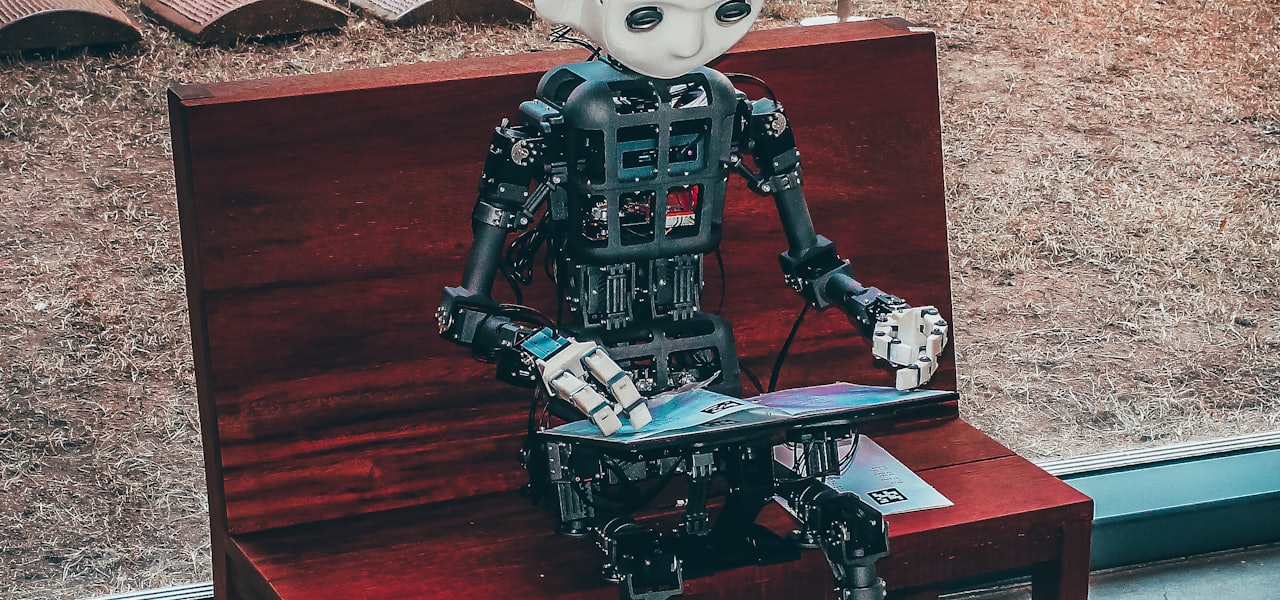
Automation engineering is a branch of engineering that deals with the development of methods and facilities that replace, in whole or in part, manual labour related to the control and monitoring of systems and processes. == Automation engineer == Automation engineers are experts who have the knowledge and ability to design, create, develop and manage machines and systems, for example, factory automation, process automation and warehouse automation. Automation technicians are also involved. == Scope == Automation engineering is the integration of standard engineering fields. Automatic control of various control systems for operating various systems or machines to reduce human efforts & time to increase accuracy. Automation engineers design and service electromechanical devices and systems for high-speed robotics and programmable logic controllers (PLCs). == Work and career after graduation == Graduates can work for both government and private sector entities such as industrial production, and companies that create and use automation systems, for example, the paper industry, automotive industry, metallurgical industry, food and agricultural industry, water treatment, and oil & gas sectors such as refineries, rolling mills, and power plants. == Job description == Automation engineers can design, program, simulate and test automated machinery and processes, and are usually employed in industries such as the energy sector in plants, car manufacturing facilities, food processing plants, and robots. Automation engineers are responsible for creating detailed design specifications and other documents, developing automation based on specific requirements for the process involved, and conforming to international standards like IEC-61508, local standards, and other process-specific guidelines and specifications, simulating, testing, and commissioning electronic equipment for automation.
Template matching
Template matching is a technique in digital image processing for finding small parts of an image which match a template image. It can be used for quality control in manufacturing, navigation of mobile robots, or edge detection in images. The main challenges in a template matching task are detection of occlusion, when a sought-after object is partly hidden in an image; detection of non-rigid transformations, when an object is distorted or imaged from different angles; sensitivity to illumination and background changes; background clutter; and scale changes. == Feature-based approach == The feature-based approach to template matching relies on the extraction of image features, such as shapes, textures, and colors, that match the target image or frame. This approach is usually achieved using neural networks and deep-learning classifiers such as VGG, AlexNet, and ResNet.Convolutional neural networks (CNNs), which many modern classifiers are based on, process an image by passing it through different hidden layers, producing a vector at each layer with classification information about the image. These vectors are extracted from the network and used as the features of the image. Feature extraction using deep neural networks, like CNNs, has proven extremely effective has become the standard in state-of-the-art template matching algorithms. This feature-based approach is often more robust than the template-based approach described below. As such, it has become the state-of-the-art method for template matching, as it can match templates with non-rigid and out-of-plane transformations, as well as high background clutter and illumination changes. == Template-based approach == For templates without strong features, or for when the bulk of a template image constitutes the matching image as a whole, a template-based approach may be effective. Since template-based matching may require sampling of a large number of data points, it is often desirable to reduce the number of sampling points by reducing the resolution of search and template images by the same factor before performing the operation on the resultant downsized images. This pre-processing method creates a multi-scale, or pyramid, representation of images, providing a reduced search window of data points within a search image so that the template does not have to be compared with every viable data point. Pyramid representations are a method of dimensionality reduction, a common aim of machine learning on data sets that suffer the curse of dimensionality. == Common challenges == In instances where the template may not provide a direct match, it may be useful to implement eigenspaces to create templates that detail the matching object under a number of different conditions, such as varying perspectives, illuminations, color contrasts, or object poses. For example, if an algorithm is looking for a face, its template eigenspaces may consist of images (i.e., templates) of faces in different positions to the camera, in different lighting conditions, or with different expressions (i.e., poses). It is also possible for a matching image to be obscured or occluded by an object. In these cases, it is unreasonable to provide a multitude of templates to cover each possible occlusion. For example, the search object may be a playing card, and in some of the search images, the card is obscured by the fingers of someone holding the card, or by another card on top of it, or by some other object in front of the camera. In cases where the object is malleable or poseable, motion becomes an additional problem, and problems involving both motion and occlusion become ambiguous. In these cases, one possible solution is to divide the template image into multiple sub-images and perform matching on each subdivision. == Deformable templates in computational anatomy == Template matching is a central tool in computational anatomy (CA). In this field, a deformable template model is used to model the space of human anatomies and their orbits under the group of diffeomorphisms, functions which smoothly deform an object. Template matching arises as an approach to finding the unknown diffeomorphism that acts on a template image to match the target image. Template matching algorithms in CA have come to be called large deformation diffeomorphic metric mappings (LDDMMs). Currently, there are LDDMM template matching algorithms for matching anatomical landmark points, curves, surfaces, volumes. == Template-based matching explained using cross correlation or sum of absolute differences == A basic method of template matching sometimes called "Linear Spatial Filtering" uses an image patch (i.e., the "template image" or "filter mask") tailored to a specific feature of search images to detect. This technique can be easily performed on grey images or edge images, where the additional variable of color is either not present or not relevant. Cross correlation techniques compare the similarities of the search and template images. Their outputs should be highest at places where the image structure matches the template structure, i.e., where large search image values get multiplied by large template image values. This method is normally implemented by first picking out a part of a search image to use as a template. Let S ( x , y ) {\displaystyle S(x,y)} represent the value of a search image pixel, where ( x , y ) {\displaystyle (x,y)} represents the coordinates of the pixel in the search image. For simplicity, assume pixel values are scalar, as in a greyscale image. Similarly, let T ( x t , y t ) {\textstyle T(x_{t},y_{t})} represent the value of a template pixel, where ( x t , y t ) {\textstyle (x_{t},y_{t})} represents the coordinates of the pixel in the template image. To apply the filter, simply move the center (or origin) of the template image over each point in the search image and calculate the sum of products, similar to a dot product, between the pixel values in the search and template images over the whole area spanned by the template. More formally, if ( 0 , 0 ) {\displaystyle (0,0)} is the center (or origin) of the template image, then the cross correlation T ⋆ S {\displaystyle T\star S} at each point ( x , y ) {\displaystyle (x,y)} in the search image can be computed as: ( T ⋆ S ) ( x , y ) = ∑ ( x t , y t ) ∈ T T ( x t , y t ) ⋅ S ( x t + x , y t + y ) {\displaystyle (T\star S)(x,y)=\sum _{(x_{t},y_{t})\in T}T(x_{t},y_{t})\cdot S(x_{t}+x,y_{t}+y)} For convenience, T {\displaystyle T} denotes both the pixel values of the template image as well as its domain, the bounds of the template. Note that all possible positions of the template with respect to the search image are considered. Since cross correlation values are greatest when the values of the search and template pixels align, the best matching position ( x m , y m ) {\displaystyle (x_{m},y_{m})} corresponds to the maximum value of T ⋆ S {\displaystyle T\star S} over S {\displaystyle S} . Another way to handle translation problems on images using template matching is to compare the intensities of the pixels, using the sum of absolute differences (SAD) measure. To formulate this, let I S ( x s , y s ) {\displaystyle I_{S}(x_{s},y_{s})} and I T ( x t , y t ) {\displaystyle I_{T}(x_{t},y_{t})} denote the light intensity of pixels in the search and template images with coordinates ( x s , y s ) {\displaystyle (x_{s},y_{s})} and ( x t , y t ) {\displaystyle (x_{t},y_{t})} , respectively. Then by moving the center (or origin) of the template to a point ( x , y ) {\displaystyle (x,y)} in the search image, as before, the sum of absolute differences between the template and search pixel intensities at that point is: S A D ( x , y ) = ∑ ( x t , y t ) ∈ T | I T ( x t , y t ) − I S ( x t + x , y t + y ) | {\displaystyle SAD(x,y)=\sum _{(x_{t},y_{t})\in T}\left\vert I_{T}(x_{t},y_{t})-I_{S}(x_{t}+x,y_{t}+y)\right\vert } With this measure, the lowest SAD gives the best position for the template, rather than the greatest as with cross correlation. SAD tends to be relatively simple to implement and understand, but it also tends to be relatively slow to execute. A simple C++ implementation of SAD template matching is given below. == Implementation == In this simple implementation, it is assumed that the above described method is applied on grey images: This is why Grey is used as pixel intensity. The final position in this implementation gives the top left location for where the template image best matches the search image. One way to perform template matching on color images is to decompose the pixels into their color components and measure the quality of match between the color template and search image using the sum of the SAD computed for each color separately. == Speeding up the process == In the past, this type of spatial filtering was normally only used in dedicated hardware solutions because of the computational complexity of the operation, however we can lessen this complexity b
Pandemonium architecture
Pandemonium architecture is a theory in cognitive science that describes how visual images are processed by the brain. It has applications in artificial intelligence and pattern recognition. The theory was introduced by the artificial intelligence pioneer Oliver Selfridge in his 1959 paper "Pandemonium - A Paradigm for Learning". It describes the process of object recognition as the exchange of signals within a hierarchical system of detection and association, the elements of which Selfridge metaphorically termed "demons". This model is now recognized as the basis of visual perception in cognitive science. Pandemonium architecture arose in response to the inability of template matching theories to offer a biologically plausible explanation of the image constancy phenomenon. Contemporary researchers praise this architecture for its elegancy and creativity; that the idea of having multiple independent systems (e.g., feature detectors) working in parallel to address the image constancy phenomena of pattern recognition is powerful yet simple. The basic idea of the pandemonium architecture is that a pattern is first perceived in its parts before the "whole". Pandemonium architecture was one of the first computational models in pattern recognition. Although not perfect, the pandemonium architecture influenced the development of modern connectionist, artificial intelligence, and word recognition models. == History == Most research in perception has been focused on the visual system, investigating the mechanisms of how we see and understand objects. A critical function of our visual system is its ability to recognize patterns, but the mechanism by which this is achieved is unclear. The earliest theory that attempted to explain how we recognize patterns is the template matching model. According to this model, we compare all external stimuli against an internal mental representation. If there is "sufficient" overlap between the perceived stimulus and the internal representation, we will "recognize" the stimulus. Although some machines follow a template matching model (e.g., bank machines verifying signatures and accounting numbers), the theory is critically flawed in explaining the phenomena of image constancy: we can easily recognize a stimulus regardless of the changes in its form of presentation (e.g., T and T are both easily recognized as the letter T). It is highly unlikely that we have a stored template for all of the variations of every single pattern. As a result of the biological plausibility criticism of the template matching model, feature detection models began to rise. In a feature detection model, the image is first perceived in its basic individual elements before it is recognized as a whole object. For example, when we are presented with the letter A, we would first see a short horizontal line and two slanted long diagonal lines. Then we would combine the features to complete the perception of A. Each unique pattern consists of different combination of features, which means those that are formed with the same features will generate the same recognition. That is, regardless of how we rotate the letter A, is still perceived as the letter A. It is easy for this sort of architecture to account for the image constancy phenomena because you only need to "match" at the basic featural level, which is presumed to be limited and finite, thus biologically plausible. The best known feature detection model is called the pandemonium architecture. == Pandemonium architecture == The pandemonium architecture was originally developed by Oliver Selfridge in the late 1950s. The architecture is composed of different groups of "demons" working independently to process the visual stimulus. Each group of demons is assigned to a specific stage in recognition, and within each group, the demons work in parallel. There are four major groups of demons in the original architecture. The concept of feature demons, that there are specific neurons dedicated to perform specialized processing is supported by research in neuroscience. Hubel and Wiesel found there were specific cells in a cat's brain that responded to specific lengths and orientations of a line. Similar findings were discovered in frogs, octopuses and a variety of other animals. Octopuses were discovered to be only sensitive to verticality of lines, whereas frogs demonstrated a wider range of sensitivity. These animal experiments demonstrate that feature detectors seem to be a very primitive development. That is, it did not result from the higher cognitive development of humans. Not surprisingly, there is also evidence that the human brain possesses these elementary feature detectors as well. Moreover, this architecture is capable of learning, similar to a back-propagation styled neural network. The weight between the cognitive and feature demons can be adjusted in proportion to the difference between the correct pattern and the activation from the cognitive demons. To continue with our previous example, when we first learned the letter R, we know is composed of a curved, long straight, and a short angled line. Thus when we perceive those features, we perceive R. However, the letter P consists of very similar features, so during the beginning stages of learning, it is likely for this architecture to mistakenly identify R as P. But through constant exposure of confirming R's features to be identified as R, the weights of R's features to P are adjusted so the P response becomes inhibited (e.g., learning to inhibit the P response when a short angled line is detected). In principle, a pandemonium architecture can recognize any pattern. As mentioned earlier, this architecture makes error predictions based on the amount of overlapping features. Such as, the most likely error for R should be P. Thus, in order to show this architecture represents the human pattern recognition system we must put these predictions into test. Researchers have constructed scenarios where various letters are presented in situations that make them difficult to identify; then types of errors were observed, which was used to generate confusion matrices: where all of the errors for each letter are recorded. Generally, the results from these experiments matched the error predictions from the pandemonium architecture. Also as a result of these experiments, some researchers have proposed models that attempted to list all of the basic features in the Roman alphabet. == Criticism == A major criticism of the pandemonium architecture is that it adopts a completely bottom-up processing: recognition is entirely driven by the physical characteristics of the targeted stimulus. This means that it is unable to account for any top-down processing effects, such as context effects (e.g., pareidolia), where contextual cues can facilitate (e.g., word superiority effect: it is relatively easier to identify a letter when it is part of a word than in isolation) processing. However, this is not a fatal criticism to the overall architecture, because is relatively easy to add a group of contextual demons to work along with the cognitive demons to account for these context effects. Although the pandemonium architecture is built on the fact that it can account for the image constancy phenomena, some researchers have argued otherwise; and pointed out that the pandemonium architecture might share the same flaws from the template matching models. For example, the letter H is composed of 2 long vertical lines and a short horizontal line; but if we rotate the H 90 degrees in either direction, it is now composed of 2 long horizontal lines and a short vertical line. In order to recognize the rotated H as H, we would need a rotated H cognitive demon. Thus we might end up with a system that requires a large number of cognitive demons in order to produce accurate recognition, which would lead to the same biological plausibility criticism of the template matching models. However, it is rather difficult to judge the validity of this criticism because the pandemonium architecture does not specify how and what features are extracted from incoming sensory information, it simply outlines the possible stages of pattern recognition. But of course that raises its own questions, to which it is almost impossible to criticize such a model if it does not include specific parameters. Also, the theory appears to be rather incomplete without defining how and what features are extracted, which proves to be especially problematic with complex patterns (e.g., extracting the weight and features of a dog). Some researchers have also pointed out that the evidence supporting the pandemonium architecture has been very narrow in its methodology. Majority of the research that supports this architecture has often referred to its ability to recognize simple schematic drawings that are selected from a small finite set (e.g., letters in the Roman alphabet). Evidence from these types of exper
2024 National Public Data breach
In August 2024, three class-action lawsuits were filed against National Public Data along with over 14 complaints filed in federal court, claiming that the company permitted hackers to steal sensitive private information covering millions of individuals. The theft was alleged to have occurred in April 2024. One of the lawsuits specifically claims that in April, a hacker going by the moniker "USDoD" posted a notice on the dark web, offering the data for sale at the price of US$3.5 million. The information stolen is alleged to include 2.9 billion records containing full names, current and past addresses, Social Security numbers, dates of birth, and telephone numbers. The stolen data contains records for people in the US, UK, and Canada. National Public Data confirmed on August 16, 2024, there was a breach originating from someone trying to breach their systems since December 2023, with the breach occurring from April 2024 and over the next few months. The company also confirmed that 2.9 billion records were obtained, though they were still working to determine how many people were affected by the breach, and were working with law enforcement to identify the hacker. == Jerico Pictures == Jerico Pictures, Inc., doing business as National Public Data, was a data broker company that performed employee background checks. Their primary service was collecting information from public data sources, including criminal records, addresses, and employment history, and offering that information for sale. On October 2, 2024, Jerico Pictures filed for Chapter 11 bankruptcy as it currently faces over a dozen lawsuits over the breach, and is potentially liable "for credit monitoring for hundreds of millions of potentially impacted individuals." In December 2024, National Public Data shut down, showing a closure notice on its website.
Spherical basis
In pure and applied mathematics, particularly quantum mechanics and computer graphics and their applications, a spherical basis is the basis used to express spherical tensors. The spherical basis closely relates to the description of angular momentum in quantum mechanics and spherical harmonic functions. While spherical polar coordinates are one orthogonal coordinate system for expressing vectors and tensors using polar and azimuthal angles and radial distance, the spherical basis are constructed from the standard basis and use complex numbers. == In three dimensions == A vector A in 3D Euclidean space R3 can be expressed in the familiar Cartesian coordinate system in the standard basis ex, ey, ez, and coordinates Ax, Ay, Az: or any other coordinate system with associated basis set of vectors. From this extend the scalars to allow multiplication by complex numbers, so that we are now working in C 3 {\displaystyle \mathbb {C} ^{3}} rather than R 3 {\displaystyle \mathbb {R} ^{3}} . === Basis definition === In the spherical bases denoted e+, e−, e0, and associated coordinates with respect to this basis, denoted A+, A−, A0, the vector A is: where the spherical basis vectors can be defined in terms of the Cartesian basis using complex-valued coefficients in the xy plane: in which i {\displaystyle i} denotes the imaginary unit, and one normal to the plane in the z direction: e 0 = e z {\displaystyle \mathbf {e} _{0}=\mathbf {e} _{z}} The inverse relations are: === Commutator definition === While giving a basis in a 3-dimensional space is a valid definition for a spherical tensor, it only covers the case for when the rank k {\displaystyle k} is 1. For higher ranks, one may use either the commutator, or rotation definition of a spherical tensor. The commutator definition is given below, any operator T q ( k ) {\displaystyle T_{q}^{(k)}} that satisfies the following relations is a spherical tensor: [ J ± , T q ( k ) ] = ℏ ( k ∓ q ) ( k ± q + 1 ) T q ± 1 ( k ) {\displaystyle [J_{\pm },T_{q}^{(k)}]=\hbar {\sqrt {(k\mp q)(k\pm q+1)}}T_{q\pm 1}^{(k)}} [ J z , T q ( k ) ] = ℏ q T q ( k ) {\displaystyle [J_{z},T_{q}^{(k)}]=\hbar qT_{q}^{(k)}} === Rotation definition === Analogously to how the spherical harmonics transform under a rotation, a general spherical tensor transforms as follows, when the states transform under the unitary Wigner D-matrix D ( R ) {\displaystyle {\mathcal {D}}(R)} , where R is a (3×3 rotation) group element in SO(3). That is, these matrices represent the rotation group elements. With the help of its Lie algebra, one can show these two definitions are equivalent. D ( R ) T q ( k ) D † ( R ) = ∑ q ′ = − k k T q ′ ( k ) D q ′ q ( k ) {\displaystyle {\mathcal {D}}(R)T_{q}^{(k)}{\mathcal {D}}^{\dagger }(R)=\sum _{q'=-k}^{k}T_{q'}^{(k)}{\mathcal {D}}_{q'q}^{(k)}} === Coordinate vectors === For the spherical basis, the coordinates are complex-valued numbers A+, A0, A−, and can be found by substitution of (3B) into (1), or directly calculated from the inner product ⟨, ⟩ (5): A 0 = ⟨ e 0 , A ⟩ = ⟨ e z , A ⟩ = A z {\displaystyle A_{0}=\left\langle \mathbf {e} _{0},\mathbf {A} \right\rangle =\left\langle \mathbf {e} _{z},\mathbf {A} \right\rangle =A_{z}} with inverse relations: In general, for two vectors with complex coefficients in the same real-valued orthonormal basis ei, with the property ei·ej = δij, the inner product is: where · is the usual dot product and the complex conjugate must be used to keep the magnitude (or "norm") of the vector positive definite. == Properties (three dimensions) == === Orthonormality === The spherical basis is an orthonormal basis, since the inner product ⟨, ⟩ (5) of every pair vanishes meaning the basis vectors are all mutually orthogonal: ⟨ e + , e − ⟩ = ⟨ e − , e 0 ⟩ = ⟨ e 0 , e + ⟩ = 0 {\displaystyle \left\langle \mathbf {e} _{+},\mathbf {e} _{-}\right\rangle =\left\langle \mathbf {e} _{-},\mathbf {e} _{0}\right\rangle =\left\langle \mathbf {e} _{0},\mathbf {e} _{+}\right\rangle =0} and each basis vector is a unit vector: ⟨ e + , e + ⟩ = ⟨ e − , e − ⟩ = ⟨ e 0 , e 0 ⟩ = 1 {\displaystyle \left\langle \mathbf {e} _{+},\mathbf {e} _{+}\right\rangle =\left\langle \mathbf {e} _{-},\mathbf {e} _{-}\right\rangle =\left\langle \mathbf {e} _{0},\mathbf {e} _{0}\right\rangle =1} hence the need for the normalizing factors of 1 / 2 {\displaystyle 1/\!{\sqrt {2}}} . === Change of basis matrix === The defining relations (3A) can be summarized by a transformation matrix U: ( e + e − e 0 ) = U ( e x e y e z ) , U = ( − 1 2 − i 2 0 + 1 2 − i 2 0 0 0 1 ) , {\displaystyle {\begin{pmatrix}\mathbf {e} _{+}\\\mathbf {e} _{-}\\\mathbf {e} _{0}\end{pmatrix}}=\mathbf {U} {\begin{pmatrix}\mathbf {e} _{x}\\\mathbf {e} _{y}\\\mathbf {e} _{z}\end{pmatrix}}\,,\quad \mathbf {U} ={\begin{pmatrix}-{\frac {1}{\sqrt {2}}}&-{\frac {i}{\sqrt {2}}}&0\\+{\frac {1}{\sqrt {2}}}&-{\frac {i}{\sqrt {2}}}&0\\0&0&1\end{pmatrix}}\,,} with inverse: ( e x e y e z ) = U − 1 ( e + e − e 0 ) , U − 1 = ( − 1 2 + 1 2 0 + i 2 + i 2 0 0 0 1 ) . {\displaystyle {\begin{pmatrix}\mathbf {e} _{x}\\\mathbf {e} _{y}\\\mathbf {e} _{z}\end{pmatrix}}=\mathbf {U} ^{-1}{\begin{pmatrix}\mathbf {e} _{+}\\\mathbf {e} _{-}\\\mathbf {e} _{0}\end{pmatrix}}\,,\quad \mathbf {U} ^{-1}={\begin{pmatrix}-{\frac {1}{\sqrt {2}}}&+{\frac {1}{\sqrt {2}}}&0\\+{\frac {i}{\sqrt {2}}}&+{\frac {i}{\sqrt {2}}}&0\\0&0&1\end{pmatrix}}\,.} It can be seen that U is a unitary matrix, in other words its Hermitian conjugate U† (complex conjugate and matrix transpose) is also the inverse matrix U−1. For the coordinates: ( A + A − A 0 ) = U ∗ ( A x A y A z ) , U ∗ = ( − 1 2 + i 2 0 + 1 2 + i 2 0 0 0 1 ) , {\displaystyle {\begin{pmatrix}A_{+}\\A_{-}\\A_{0}\end{pmatrix}}=\mathbf {U} ^{\mathrm {} }{\begin{pmatrix}A_{x}\\A_{y}\\A_{z}\end{pmatrix}}\,,\quad \mathbf {U} ^{\mathrm {} }={\begin{pmatrix}-{\frac {1}{\sqrt {2}}}&+{\frac {i}{\sqrt {2}}}&0\\+{\frac {1}{\sqrt {2}}}&+{\frac {i}{\sqrt {2}}}&0\\0&0&1\end{pmatrix}}\,,} and inverse: ( A x A y A z ) = ( U ∗ ) − 1 ( A + A − A 0 ) , ( U ∗ ) − 1 = ( − 1 2 + 1 2 0 − i 2 − i 2 0 0 0 1 ) . {\displaystyle {\begin{pmatrix}A_{x}\\A_{y}\\A_{z}\end{pmatrix}}=(\mathbf {U} ^{\mathrm {} })^{-1}{\begin{pmatrix}A_{+}\\A_{-}\\A_{0}\end{pmatrix}}\,,\quad (\mathbf {U} ^{\mathrm {} })^{-1}={\begin{pmatrix}-{\frac {1}{\sqrt {2}}}&+{\frac {1}{\sqrt {2}}}&0\\-{\frac {i}{\sqrt {2}}}&-{\frac {i}{\sqrt {2}}}&0\\0&0&1\end{pmatrix}}\,.} === Cross products === Taking cross products of the spherical basis vectors, we find an obvious relation: e q × e q = 0 {\displaystyle \mathbf {e} _{q}\times \mathbf {e} _{q}={\boldsymbol {0}}} where q is a placeholder for +, −, 0, and two less obvious relations: e ± × e ∓ = ± i e 0 {\displaystyle \mathbf {e} _{\pm }\times \mathbf {e} _{\mp }=\pm i\mathbf {e} _{0}} e ± × e 0 = ± i e ± {\displaystyle \mathbf {e} _{\pm }\times \mathbf {e} _{0}=\pm i\mathbf {e} _{\pm }} === Inner product in the spherical basis === The inner product between two vectors A and B in the spherical basis follows from the above definition of the inner product: ⟨ A , B ⟩ = A + B + ⋆ + A − B − ⋆ + A 0 B 0 ⋆ {\displaystyle \left\langle \mathbf {A} ,\mathbf {B} \right\rangle =A_{+}B_{+}^{\star }+A_{-}B_{-}^{\star }+A_{0}B_{0}^{\star }}